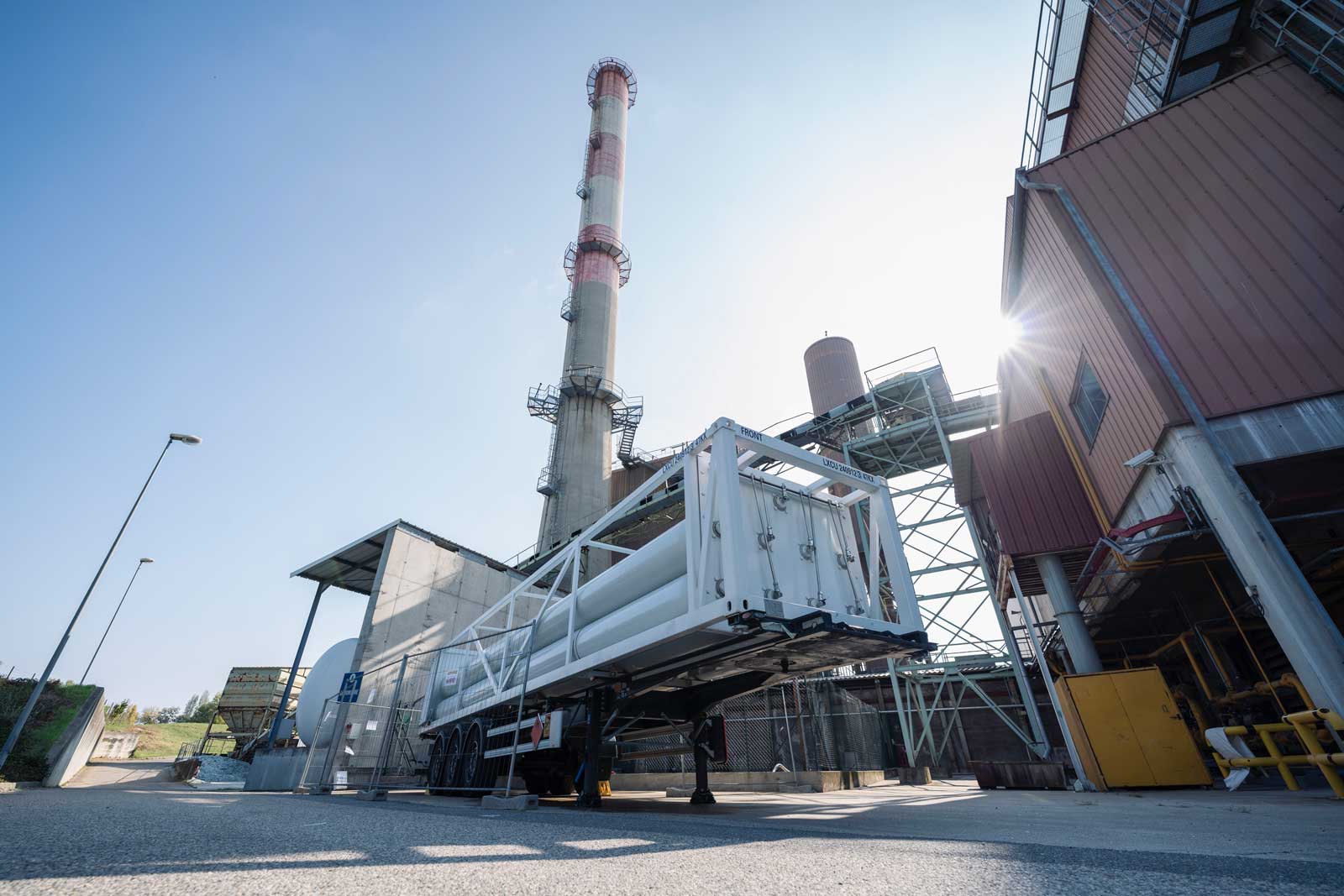
A European premiere:green gas to power glass production
In Salaise-sur-Sanne (Isère), the Euro float plant, owned by Saint-Gobain Glass, an expert in glass solutions for building construction and renovation, and Riou Flat Glass, which specializes in smart glass solutions and products, has just taken a major step forward: the integration of local biomethane into the flat glass manufacturingprocess. A major premiere in Europe for the industry!
This operation, carried out in two stages between August andOctober 2025, marks another step forward in industrial decarbonization. It proves that it is now possible to power industrial processes — such as the highly technical ones used in flat glass manufacturing—with renewable energy from local agricultural activity, via road gas transportation (virtualpipeline).
A link between the agricultural world and industry thanks to virtual pipeline
Methagora has rethought the anaerobic digestion model to offer a new path for farmers' projects and providetruly greener energy to those committed to the environment.
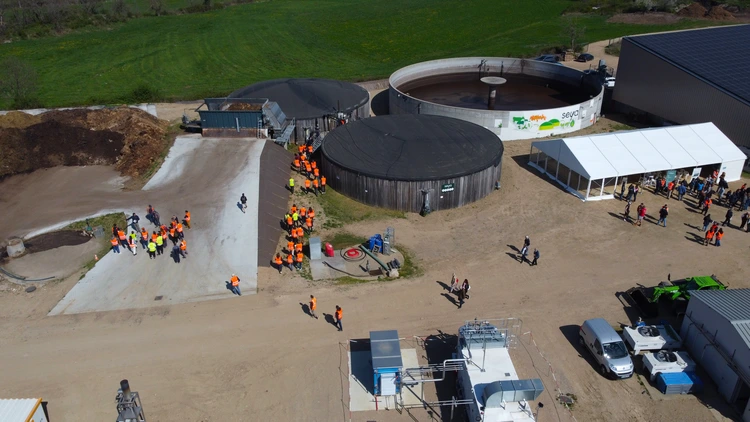
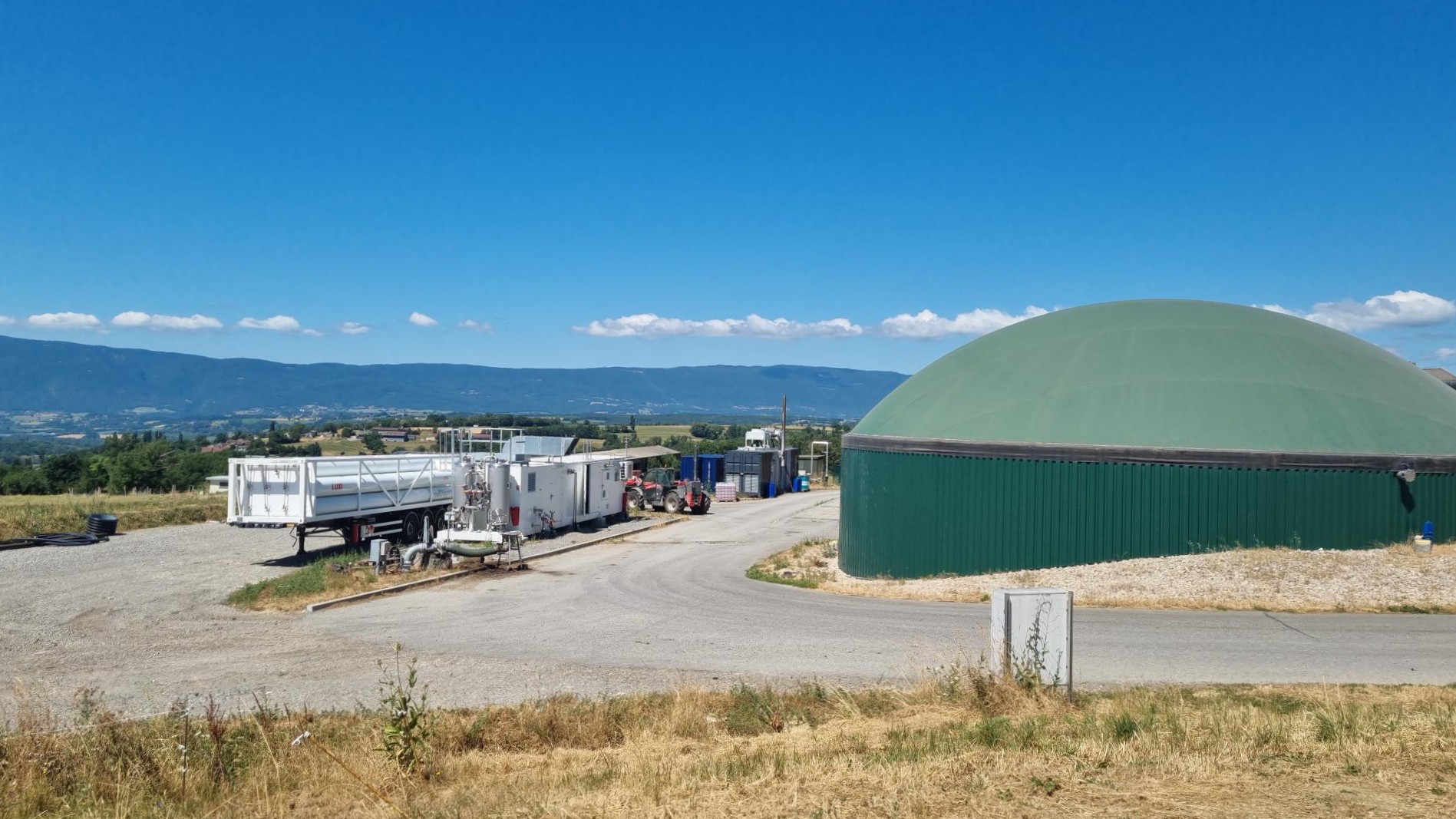
Thanks to the virtual pipeline model, the biomethane produced can be recovered by all agricultural biogas production units, including those that cannot be connected to the gasnetwork.
The operating principle is simple: the cleant biogas is collected, purified, compressed, and then transported by tanker truck to a central site or directly to an industrial consumer site. This logistical and technical solution is the one that was deployed for Saint-Gobain Glass.
A collaboration between Saint-Gobain Glass, GRDF, and Methagora
This project was made possible thanks to the collaboration between Saint-Gobain Glass, GRDF (gas distributor in France), and Methagora (solution developer for the biomethane production and marketing). Between October 7 and 16, 2025, four deliveries of green gas were made by tanker truck to the Eurofloat plant. The biomethane, produced from agricultural materials and bio-waste recovered locally in Auvergne-Rhône-Alpes, was injected into the plant's internal network after decompression and regulation by GRDF.
These successive operations enabled Euro float to replacepart of its fossil gas consumption by renewable gas, which has six times lower carbon content than natural gas. This is a tangible step forward for an industry that consumes more than 340 GWh of gas per year and aims to reduce its carbon footprint by 33% by 2030 in order to achieve carbon neutrality by 2050.
" The use of dairy farming effluent makes the delivery of a negative carbon content green gas possible. As a fact, including transport and fuel, delivered gas had a carbon footprint of -27 grams of CO₂permegajoule, versus +80 grams for fossil gas," says Florent Thouminot, CEO of Methagora.
Green and traceable energy to help decarbonize industry
This tangible example is based on a collaborative ecosystem, in which each player (from the agricultural or industrial world) contributes to the energy transition, in particular by reducing emissions from industrial processes. In this way, Methagora is committed tomeeting the following requirements:
- Gas quality identical to the public gas network one, fully adapted to industrial uses.
- Complete traceability, ensured by Guarantees of Origin (GO), Proofs of Sustainability (POS), and/or Biomethane Production Certificates (CPB).
- Stable and sustainable contracts, Biogas Purchase Agreements (BPA), guaranteeing a fixed price and continuous supply
- Flexible and safe logistics, thanks to a combination of pressurized road transport (up to 250 bars) and gas grid use.
A collective dynamic for a more sustainable energy future.
Beyond the success of the operation carried out withSaint-Gobain Glass, this project represents a key milestone for the biomethanesector. It demonstrates that the technical solutions, logistics, and regionalcooperation are already in place to supply industrial sites with greengas. Saint-Gobain Glass now intends to roll out this operation, which hasproven success for Eurofloat, to its other sites in France.
By connecting the agricultural, energy, and industrial worlds, Methagora is acting as a catalyst for transition. It is a true collaboration between those who produce local, renewable energy and those who need it to make their production greener.
This achievement proves that the industry decarbonization relies above all on cooperation, expertise, and trust between each energy player. Beyond flat glass production, it paves the way for new initiatives invarious sectors, where biomethane is gradually becoming an alternative to fossil gas.


.svg)




.png)
.svg)
